Rob Horton’s social isolation
The Tiger RisingRob Horton’s social isolation is both a condition imposed on him by school and a strategy he uses to keep pain and vulnerability out of view. Bullied on the bus, overlooked by adults, and reluctant to speak about his mother or the tiger, he learns to endure rather than answer. Yet the habit of standing apart is not the same as indifference: when Sistine Bailey is attacked, he draws the crowd after himself, and later longs for someone who can believe what he has seen. His isolation marks the pressure of grief and cruelty, but also the distance he begins, unevenly, to cross.
Identity and Background
Six months after Rob and his father moved from Jacksonville to Lister following his mother’s funeral, Rob had not cried once. His father’s blunt rule—that crying would not bring her back—helped establish silence as the expected response to loss. Rob describes his own method as packing feelings into an overfull suitcase, sitting on it, and locking it shut. The image gives his isolation an inward dimension: it is not simply that he lacks company, but that he actively contains what he might otherwise share.
The tiger becomes something he can place on top of that tightly closed suitcase. While waiting for the bus beneath the Kentucky Star sign in the rain, he imagines the animal sitting proud and strong, untouched by the feelings pressing inside him. The image offers temporary support, but it also suggests how little room Rob has made for another person to approach the grief beneath his practiced composure.
Bullying and Institutional Neglect
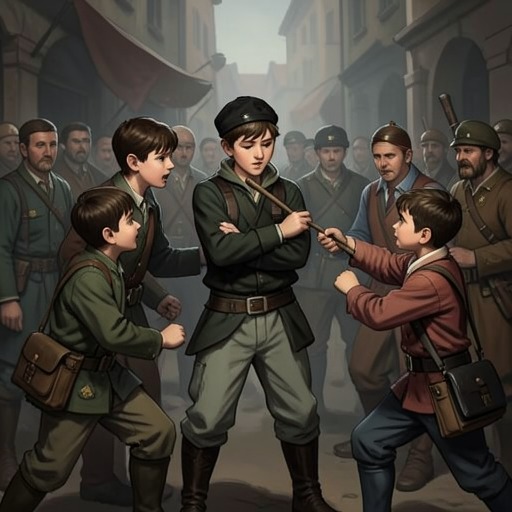
Rob’s solitude is intensified by Norton and Billy Threemonger, who wait for him on the bus. Billy mocks him, and Norton joins him in hurting Rob, grabbing his hair and grinding his knuckles into his scalp. Rob has learned that resisting only prolongs the attack; if he stays still, the boys may eventually get bored. Their driver, Mr. Nelson, pretends not to notice and stares ahead as he whistles tunelessly. Rob understands the scene as abandonment: he is left to manage the assault by himself.
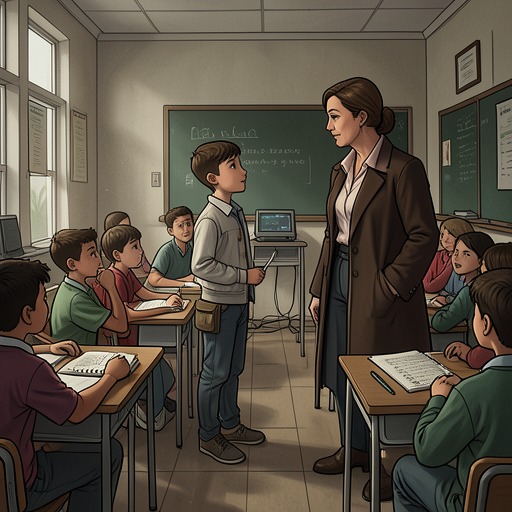
Billy also points to Rob’s legs and calls the rash disgusting. Rob does not cry in response. He regards himself as exceptionally practiced at not crying, and thinking about the tiger gives him what he calls extra power against the boys’ efforts to make him break down. The school’s attention does not repair this isolation. Principal Mr. Phelmer repeatedly worries that Rob does not interact with other students or communicate, but Rob avoids looking at him and fixes his gaze on the certificates and diplomas on the wall. The concern is voiced, yet the evidence shows no easy connection following from it.
Withdrawal in School
Even after learning he will not have to return to school, Rob remains physically and socially apart from its crowded spaces. At lunch he sits on the breezeway benches instead of entering the lunchroom, where Norton and Billy are. Food has not tasted good to him since his mother died, and the school’s meals are especially unappealing. His withdrawal therefore joins two forms of estrangement: avoidance of the boys who hurt him and a loss of ordinary pleasure tied to bereavement.
On the bench, Rob studies his drawing of the tiger and wants to carve it in wood. The drawing gives his attention a focus outside the school’s social world, but he is interrupted by shouting and the excited noise of students gathering around an incident. Sistine emerges from the lunchroom as the crowd follows her; someone throws an apple at her. Rob initially stays where he is. His stillness breaks only when he sees what has been thrown and realizes the students are waiting to see what he will do.
A Break in the Pattern
Rob runs, and the students chase him. He does not need to look back to know they are following: the feeling of being pursued is already familiar. But this time the chase has a different purpose. As he runs, he understands that he is saving Sistine, even though he cannot explain why he wants to help someone who has treated him with hostility. The bell rings before the students catch him. He reaches English late after walking from the gym to the front of the school, and he has lost track of his tiger drawing; the principal’s note in his pocket, proving that he will not have to return, remains what matters most to him.
The act is a decisive contrast to Rob’s usual way of surviving. On the bus, he submits because resistance makes the beating last longer; at school, he chooses to move and draws the threat away from someone else. The scene does not erase his isolation or make him suddenly confident. It shows instead that withdrawal has limits: faced with Sistine’s vulnerability, he acts before he can account for the impulse.
Tentative Connection and Continuing Need
After the incident, Sistine sits beside Rob on the bus because it is the last empty seat. Her dress is torn and muddy, her arm scraped, and her hair disordered. Their proximity does not immediately become trust. When she later presses him about what matters to him, Rob says he does not want his homework; as Norton and Billy approach, the first blow to the back of his head brings him relief. He welcomes the interruption because it means he will not have to talk, reveal too much, or mention his mother and the tiger. The bullies’ violence thus becomes, perversely, a barrier he can use to retreat from intimacy.
Rob’s need for connection nevertheless surfaces after Willie May leaves. He wishes he had told her about the tiger and feels a desperate need to tell someone who will not doubt him, someone capable of believing in tigers. This longing exposes what his isolation conceals: he is not content to be alone, but has learned to protect himself by withholding the very things he most wants another person to hear. His encounters with Sistine and Willie May open possibilities for trust, while his silences and the continuing bullying show how difficult it remains for him to accept them.